
If you or a loved one is suffering from chronic knee pain, stiffness, or difficulty walking, you may have been told that knee replacement surgery is the next step. But the idea of surgery can feel overwhelming — especially with so many questions about risks, recovery, and results.
The good news? Robotic knee replacement surgery has transformed the way joint replacements are done. It is more precise, less painful, and offers faster recovery than traditional surgery.
At American Ortho Center, Pune, Dr. Suresh Patil — an American Board Certified orthopaedic surgeon trained at NYU Langone Medical Center (New York) and the University of Chicago — brings world-class robotic knee replacement expertise directly to patients in Pune.
In this blog, we answer every question patients commonly ask about robotic knee replacement surgery.
What Is Robotic Knee Replacement Surgery?
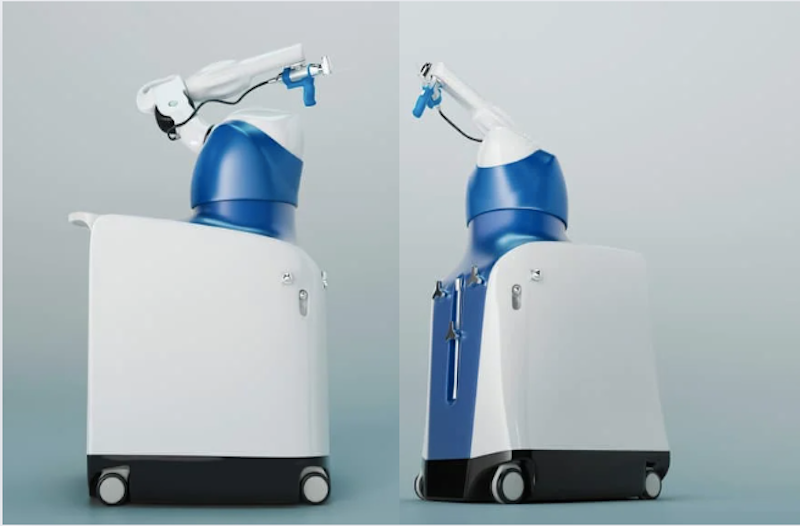
Robotic knee replacement surgery is an advanced procedure where the surgeon uses a robotic arm system (such as the Stryker Mako robot) to assist in performing a precise, personalised knee replacement.
Unlike traditional knee replacement where the surgeon works entirely by hand, robotic surgery uses:
- 3D CT scan-based planning before the procedure
- Real-time data during surgery to guide the robotic arm
- Precise bone preparation to ensure perfect implant fit and alignment
The result is a knee replacement that is tailored to your exact anatomy — not a one-size-fits-all approach.
How Is Robotic Knee Replacement Different from Traditional Knee Replacement?
Feature
- Planning
- Precision
- Implant fit
- Bone removal
- Recovery time
- Hospital stay
- Pain after surgery
- Long-term outcomes
Traditional Knee Replacement
- X-ray based
- Depends on surgeon’s hand
- Standard sizing
- Manual
- 6–8 weeks
- 3–5 days
- Moderate to high
- Good
Robotic Knee Replacement
- 3D CT scan-based
- Guided by robotic arm
- Personalised to your anatomy
- Controlled and precise
- 3–4 weeks
- 2–3 days
- Significantly less
- Excellent
Who Is a Candidate for Robotic Knee Replacement?
You may be a candidate for robotic knee replacement if you have:
- Severe knee arthritis (osteoarthritis, rheumatoid arthritis, or post-traumatic arthritis)
- Chronic knee pain that doesn’t improve with medication, physiotherapy, or injections
- Difficulty walking, climbing stairs, or performing daily activities
- Knee deformity such as bow legs or knock knees
- Failed previous knee replacement (revision surgery)
Age is not a barrier — Dr. Suresh Patil performs robotic knee replacement for patients aged 45 to 85.
The Robotic Knee Replacement Procedure — Step by Step
Step 1: Consultation and Diagnosis
Dr. Suresh Patil evaluates your knee using physical examination and X-rays to assess the extent of damage.
Step 2: 3D CT Scan Planning
A CT scan of your knee is taken and fed into the Mako robotic system. The software creates a personalised 3D model of your knee and plans the exact size, position, and angle of your implant before surgery begins.
Step 3: Surgery Day
Under anaesthesia, Dr. Patil uses the robotic arm to prepare the knee joint with extreme precision. The robotic system provides real-time feedback and prevents any movement outside the planned boundaries — making the procedure significantly safer.
Step 4: Implant Placement
The knee implant is placed in the exact position planned in the 3D model, ensuring perfect alignment, balance, and function.
Step 5: Recovery
Most patients are walking with support within 24 hours of surgery. Physiotherapy begins the next day, and most patients return to daily activities within 3 to 4 weeks.
Benefits of Robotic Knee Replacement Surgery
- Greater precision — implant placement accurate to within 1mm
- Less pain after surgery due to minimal soft tissue damage
- Faster recovery — back to walking in 24 hours
- Longer implant life — correct alignment means the implant lasts longer
- Lower risk of complications — robotic boundaries prevent surgical errors
- Natural knee feel — patients report the knee feels more natural after surgery
- Personalised surgery — planned specifically for your knee anatomy
Recovery After Robotic Knee Replacement
| Timeline | What to Expect |
|---|---|
| Day 1 | Walking with support, physiotherapy begins |
| Week 1 | Discharged home, continue physiotherapy |
| Week 2–3 | Walking independently with a walker |
| Week 4–6 | Walking without support, light daily activities |
| Month 3 | Driving, climbing stairs comfortably |
| Month 6 | Full recovery, return to normal life |
Dr. Suresh Patil’s team provides a complete personalised rehabilitation plan for every patient to ensure the fastest and safest recovery.
Why Choose Dr. Suresh Patil for Robotic Knee Replacement in Pune?
- 🏆 American Board Certified — first physician in Pune to achieve ABPS certification in Orthopaedic Surgery
- 🏥 Trained at NYU Langone Medical Center, New York and University of Chicago
- 🤖 Expert in Stryker Mako Robotic Surgery — performed hundreds of robotic knee replacements
- 📍 Two convenient clinic locations — Deccan, Pune and Wakad, Pimpri-Chinchwad
- ⭐ Recognised among top 10 orthopaedic surgeons in the USA
